Islington Council Permits: When Clerkenwell Needs Suspensions
Posted on 26/06/2026
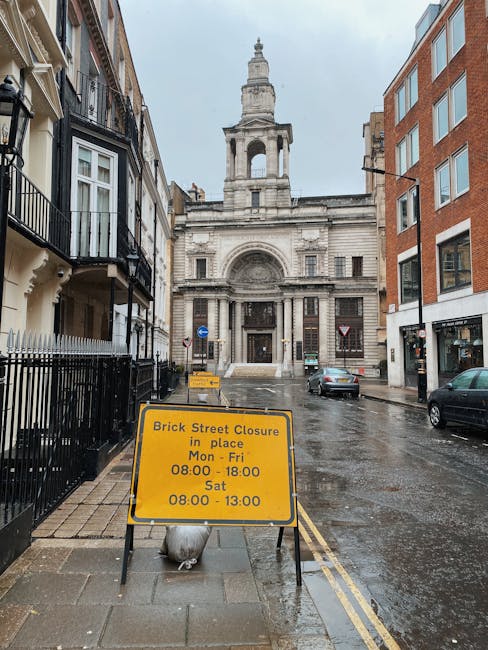
If you are planning a move, delivery, or heavy item lift in Clerkenwell, the paperwork can matter just as much as the loading plan. Islington Council permits and parking suspensions are often the difference between a smooth move and a stressful morning with nowhere to stop, a blocked street, or a van circling for ages. In practice, this topic usually comes up when a vehicle needs to occupy road space, the street is narrow, or the job involves time-sensitive access. That is especially true around EC1, where a small delay can throw the whole day off.
This guide explains Islington Council Permits: When Clerkenwell Needs Suspensions in plain English. You will learn when a suspension is likely needed, how the process works, what mistakes to avoid, and how to plan a move with fewer surprises. We will also look at practical Clerkenwell scenarios, because let's face it, the real world is rarely as tidy as a council form. One wrong assumption and suddenly the loading bay is full, the lift is booked, and the van is parked two streets away.
Why Islington Council Permits: When Clerkenwell Needs Suspensions Matters
Clerkenwell is busy, compact, and unforgiving when it comes to access. Streets can be tight, bays can already be occupied, and a single obstruction can create knock-on issues for neighbours, residents, and delivery drivers. That is why parking suspensions and related permits matter so much here: they create a temporary, agreed space for your vehicle to work safely and legally.
For a move, a suspension is not just an admin box to tick. It can affect whether your removal van can stop near the entrance, whether furniture can be moved without extra carrying distance, and whether your team can work within the time window you have booked. If you are moving from a top-floor flat or dealing with a building with awkward access, those extra metres across a pavement can become a real issue very quickly.
There is also the human side. A move day already feels full enough without a parking dispute, a fine, or a neighbour asking you to move the van "just for five minutes." Having the right suspension or permit in place keeps the day calm. Not perfect, perhaps. But calmer, and that counts for a lot.
If you are preparing for a larger move, it can help to read up on practical planning too, such as moving house without stress and organising your packing for a hassle-free move. Access and timing are easier to manage when the rest of the job is already in order.
How Islington Council Permits: When Clerkenwell Needs Suspensions Works
In simple terms, a parking suspension temporarily reserves a section of road space so it cannot be used by other vehicles during the agreed period. For moving day, that space is often used for a removal van, a loading area, or the vehicle needed to handle bulky items. The exact arrangement depends on the street, the type of bay or restriction, and how much space is required.
The word "permit" gets used loosely in conversation, but the underlying idea is usually about legal street use. Sometimes a move needs a suspension because the vehicle must occupy a parking bay. Sometimes the job can be done with a normal loading arrangement, but only if the local conditions allow it. In other cases, a longer vehicle, multiple crew members, or a difficult frontage means a temporary restriction is the safer route.
What matters most is timing. These arrangements usually need planning in advance, especially in a place like Clerkenwell where road space is limited and demand is high. Leave it too late and you may end up with a van parked far from the property, which adds time, effort, and strain. If you are moving valuable or awkward items, that can become a real problem. For example, if you are handling a piano, you may want to look at specialist support like piano removals in Clerkenwell rather than trying to improvise on the day.
It also helps to think about the street itself. A move on a narrow EC1 road is a very different beast from a wide suburban frontage. If your property sits near a tight junction or a road that sees constant traffic, you may need to plan the parking element first, then everything else around it. That sounds obvious, but in practice people often do it the other way round.
Key Benefits and Practical Advantages
The main benefit of getting the parking and suspension side right is straightforward: it gives your move a workable base. But there are several more practical advantages, and they are easy to underestimate until you have seen a move go wrong.
- Shorter carrying distances: which reduces time, effort, and the risk of damage.
- Less chance of penalties: if the vehicle is parked in an approved way, you avoid many avoidable headaches.
- Better safety: fewer long carries through busy streets means lower risk for the crew and for your belongings.
- Cleaner timing: the job can be planned more accurately, especially for slot-based move days.
- Reduced stress: you are not watching the clock while the driver hunts for a space.
There is another advantage people do not always mention: better communication. Once a suspension or parking arrangement is sorted, everyone tends to work from the same plan. The building knows when to expect the van, the movers know where to load, and you know what to expect. That shared clarity is worth a lot on a noisy London street at 8 a.m.
It also pairs well with other moving tasks. If you are decluttering before the move, that can reduce the number of trips and make the vehicle planning much simpler. A good starting point is decluttering effectively before a move, because fewer items almost always mean fewer access complications.
Who This Is For and When It Makes Sense
This topic matters to more people than you might think. It is not only for big office relocations or commercial jobs. In Clerkenwell, even a modest flat move can need careful parking arrangements if the building is on a narrow street or the entrance is hard to reach.
You are more likely to need a suspension or a formal parking arrangement if you are:
- moving house or flat in a restricted street;
- using a larger van or more than one vehicle;
- moving bulky furniture, appliances, or delicate items;
- working to a fixed timeframe, such as a tenancy handover;
- relocating an office with multiple loads and staff access;
- managing a same-day or urgent move where time is tight.
For students and flat-sharers, the need is often less obvious until the last minute. A few boxes and a mattress may sound easy enough, but then you realise the building has no private forecourt, the street is full of residents' bays, and the lift is not available. In those moments, a bit of planning can save a lot of back-and-forth. If that sounds familiar, you may also find student removals in Clerkenwell useful as a broader planning reference.
Same-day moves are a special case. They can happen, of course, and sometimes they have to. But same-day and parking restrictions are not the best mix if nobody has checked access first. If you need speed as well as structure, take a look at same-day removals in Clerkenwell and make sure the access side is handled early. Speed without access planning is just fast frustration, really.
Step-by-Step Guidance
Here is a sensible way to approach Islington Council permits and suspensions when you are moving in Clerkenwell. The exact procedure can vary by street and job type, so treat this as practical guidance rather than a rigid script.
- Check the street conditions first. Look at whether the road has bays, yellow lines, a loading area, or other restrictions. Think about whether a van can stop nearby without blocking traffic.
- Measure the practical space you need. It is not only about the vehicle. Consider ramp use, door opening, unloading distance, and whether you need room for trolleys.
- Work out the timings. Moving in the morning can be very different from moving later in the day. Busy school runs, delivery windows, and commuter traffic all matter.
- Decide whether a suspension is necessary. If you need to reserve road space or prevent competing parking, that is usually the point where a suspension becomes relevant.
- Allow enough lead time. Last-minute applications are risky. Even if the move is straightforward, the access side should be sorted well before loading starts.
- Coordinate with your removal team. The driver, movers, and property contact should all know where the van will stop and what to do if access changes.
- Prepare for the unexpected. A neighbour's vehicle may already be in the way, or a bay may be occupied. Have a backup plan in mind.
For a house move, it is often wise to combine access planning with practical moving prep. That includes packing, cleaning, and protecting the items that are awkward to carry. If you want a broader moving-day framework, house cleaning essentials before a move and bed and mattress moving tips can help you reduce the load on the day.
And if you are dealing with furniture that needs careful handling, furniture removals in Clerkenwell is a sensible place to start thinking about the physical side of the job. Access, after all, is only half the story.
Expert Tips for Better Results
After plenty of moving days, one pattern becomes clear: the jobs that go well are usually the ones where someone took access seriously early on. Not glamorous, but true. Here are the tips that make the biggest difference.
- Ask about access before you ask about labour. If the van cannot get near the property, the rest of the quote becomes less useful.
- Keep the building contact in the loop. Concierge desks, landlords, and managing agents can often flag problems before they become problems.
- Use the right vehicle size. A van that is too large for the road can be just as awkward as a van that is too small for the load.
- Plan around school-run and rush-hour patterns. A quiet-looking street can suddenly feel busy at the wrong time.
- Separate fragile or high-value items. If the van has to park a bit further away than planned, you will want the sensitive items easy to reach.
It can also help to think like a loader, not just like a homeowner. Experienced movers look at gradients, kerbs, stairwells, and turning space. That practical mindset is closely related to good lifting and handling practice. If you are curious about the broader discipline behind safe handling, the role of kinetic lifting in modern industries is an interesting read in a wider sense.
One more small tip: pack the things you need last in a separate, easy-to-reach place. Keys, documents, kettle, chargers, and a bit of tea. Sounds trivial, I know. But when you arrive tired and the van is still unloading, that box can feel like gold.
Common Mistakes to Avoid
Most access problems come from predictable mistakes. The good news is that they are usually avoidable with a bit of thought.
- Assuming a normal loading stop will be enough. Not every street allows the same flexibility.
- Leaving the parking plan until the week of the move. In a compact area like Clerkenwell, that is cutting it very fine.
- Forgetting that neighbours also need access. Blocking a shared entrance or bay can cause delays and complaints.
- Choosing the wrong van for the street. Oversized vehicles can create more risk than value.
- Not checking restrictions on both ends of the move. You may need to think about the old property and the new one.
- Overloading the schedule. If the access window is tight, even a small delay can snowball.
There is a practical money point here too. Bad planning can add costs, whether that is extra time, additional carrying, or simply the kind of problem that turns a neat quote into a mess. If quotes feel confusing, Clerkenwell removal quotes explained is worth a look before you commit.
A final mistake? Ignoring the building itself. Narrow staircases, tight corners, and old terraces can change the whole access calculation. If your route includes awkward stairs, this local guide to avoiding staircase damage in EC1M terraces may save you a headache.
Tools, Resources and Recommendations
You do not need fancy kit to manage parking and suspension planning, but a few simple tools make life easier. A notebook, a phone with photos, and a checklist go a surprisingly long way. If you can, gather visual information about the property frontage, road width, and entrance layout before the move day. A couple of clear photos can prevent a lot of confusion later.
Here are some useful practical resources to have at hand:
- A moving-day contact sheet: names, numbers, and access notes for the driver, building contact, and keyholder.
- A room-by-room packing list: especially useful if items need to be loaded in a specific order.
- Protection materials: blankets, tape, floor coverings, and mattress covers where relevant.
- Vehicle access notes: where to stop, where not to stop, and which side of the street is easiest for unloading.
- Backup parking options: useful if a bay is occupied or a restriction changes on the day.
For household items that need a little extra care, specialist planning helps. For example, if you are moving a freezer, it is worth reading how to keep your freezer intact when not in use. And for especially delicate jobs, professional piano movers are often the safer call.
If your move is likely to involve storage between properties, you can also think ahead about storage in Clerkenwell, which sometimes takes pressure off the parking schedule entirely. Fewer frantic decisions. That helps.
Law, Compliance, Standards, or Best Practice
It is worth being careful here. Parking suspensions, permits, and loading rules are tied to local authority procedures and street regulations, and those details can change. So the safest approach is to treat council guidance as the final word for your specific street, date, and vehicle type. This article is practical guidance, not legal advice.
From a best-practice point of view, the main principles are consistent:
- Do not assume a van can stop wherever it likes. Restrictions exist for traffic flow, safety, and residents' access.
- Plan for legitimate loading only. If the job requires reserved space, arrange it properly rather than improvising.
- Keep evidence of your arrangements. Confirmation notes, emails, and internal move sheets are helpful if there is any confusion.
- Respect neighbours and shared access. A good move should not create avoidable disruption.
For companies handling moves regularly, compliance is also about insurance, safety practice, and clear communication. That is why it is sensible to choose a team that treats the job methodically. You can learn more about that mindset in the company's insurance and safety and health and safety policy pages. Even if you are only moving a few streets away, the same standard should apply.
One more best-practice point: if you are using a professional team, make sure everyone understands what the move includes and what it does not. Access planning, vehicle positioning, and loading responsibility should be clear before the clock starts. That saves misunderstandings. And a move day has enough surprises already.
Options, Methods, or Comparison Table
There is more than one way to handle access in Clerkenwell. The right choice depends on the property, the vehicle, and how much space you really need. Here is a simple comparison of the main approaches.
| Option | Best for | Strengths | Limitations |
|---|---|---|---|
| Parking suspension | Jobs needing reserved road space | Reliable access, less competition for space, easier loading | Needs advance planning and may not suit every street |
| Normal loading arrangement | Smaller, shorter jobs where loading is permitted | Flexible and sometimes quicker to arrange | Not always enough space in busy areas |
| Off-street access | Buildings with driveways, courtyards, or private forecourts | Low disruption, simpler vehicle positioning | Rare in many central London properties |
| Split-load moving | Jobs with limited roadside access | Can reduce pressure on parking space | May take longer and need more coordination |
In a lot of Clerkenwell moves, the suspension option is chosen because it reduces uncertainty. But if your load is small and the street allows a proper loading stop, a simpler arrangement can be perfectly sensible. The point is not to overcomplicate things; it is to match the method to the street. A tiny one-bedroom move does not always need a huge access plan. Then again, sometimes it does. That's London.
Case Study or Real-World Example
Here is a realistic Clerkenwell-style scenario. A tenant is moving from a second-floor flat near a narrow EC1 side street. The building has no private driveway, the road is already tight with resident parking, and the lift is small enough to make a wardrobe feel like a diplomatic issue. On paper, the job is simple: one van, a few hours, standard furniture.
But once the access is checked, the picture changes. There is no practical space for the van to sit close enough without blocking other traffic, and the carrying distance would be long enough to slow the job down sharply. The team decides the move needs reserved road space rather than hoping for a free bay. That means the loading can happen close to the entrance, the heavier items can be moved in one clean run, and the client does not spend the afternoon watching the clock. Nice and steady.
What made the difference here was not luck. It was the early check on access. The packing was organised, the route was clear, and the crew knew the plan before they arrived. A same-day move would have been much harder without that. If you are ever in a similar time-sensitive situation, same-day removals for urgent tenancy moves can give you a better sense of how tight timelines should be handled.
And if the street itself is especially awkward, a local route-specific article such as navigating narrow streets around Farringdon Road is a good reminder that location details matter. They really do.
Practical Checklist
Use this checklist before moving day. It is simple, but it catches the usual problems.
- Check whether your street has parking restrictions or loading limits.
- Confirm where the van can stop for the shortest safe carry distance.
- Work out whether you need a suspension, not just a standard loading arrangement.
- Allow enough lead time for any permit or suspension process.
- Tell your removal team about narrow entrances, staircases, or awkward turns.
- Make sure your property contact knows the move time and vehicle details.
- Separate fragile, high-value, and urgent items from the main load.
- Keep a backup plan in case a parking bay is occupied on the day.
- Prepare floor protection and packing materials if items will cross common areas.
- Review the move plan the day before, not the morning after you needed it.
If you are still deciding how much help you need, it can be worth exploring broader moving support such as removals in Clerkenwell, man and van services, or removal services in Clerkenwell. The right choice depends on your load, your access, and your timetable.
Conclusion
Islington Council permits and suspensions can feel like a small detail, but for Clerkenwell moves they often shape the entire day. If the van can stop close to the property, the job becomes quicker, safer, and less stressful. If it cannot, everything else gets harder. That is why it pays to think about access early, understand the street conditions, and plan the parking side with the same care you give packing and lifting.
The best moves are usually the ones where the boring bits were handled properly. Not thrilling, perhaps, but dependable. And in a place like Clerkenwell, dependable is exactly what you want.
If you are comparing options or trying to decide how much support you need, start with the access question first. Once that is clear, the rest tends to fall into place more naturally.
Get a free quote today and see how much you can save.