Commercial Moves in Clerkenwell
If you are planning Commercial Moves in Clerkenwell, you are likely working around a busy schedule, a valuable workspace, and a building that may have more than one moving challenge built into it. Clerkenwell is home to a mix of creative studios, professional offices, design firms, showrooms, hospitality spaces, and converted buildings that often come with narrow staircases, shared entrances, loading restrictions, and limited kerb space. That means a commercial relocation here is rarely a matter of simply carrying boxes from one place to another. It needs planning, coordination, and a team that understands how to move businesses without causing unnecessary downtime.
Whether you are relocating a small office, refreshing a studio, shifting archive rooms, moving retail stock, or fitting out a larger premises, a local commercial removals service can make the process much smoother. The right team can help you protect equipment, keep essential operations running, manage access issues, and reduce the stress that usually comes with a business move. In a place like Clerkenwell, where time, access, and neighbour considerations matter, a well-organised move is not just convenient — it is often essential.
Many local customers want a service that feels practical from the start: clear planning, sensible scheduling, careful handling, and a straightforward way to request a quote. This page is written for businesses in Clerkenwell and nearby areas who want real information about how commercial moving services work, what can be included, and how to prepare for a smooth transition.
Why commercial relocations in Clerkenwell need local knowledge

Clerkenwell has a character that makes it attractive to businesses, but that same character can make a move more complicated. Many properties sit in older converted buildings, mixed-use developments, and narrow streets close to Farringdon, Barbican, Holborn, and Old Street. A commercial move in Clerkenwell often involves tight access, controlled entry points, shared lifts, and limited waiting space for vehicles. For businesses moving from one nearby building to another, it helps to have a team that already understands how central London access conditions can affect timings and logistics.
Local knowledge can make a noticeable difference when it comes to office removals in Clerkenwell, shop moves, and business relocations. A crew familiar with the area is more likely to plan around loading bays, traffic patterns, one-way systems, and building rules that may affect when and how a move takes place. That matters whether you are leaving a modern office near Clerkenwell Road or moving into a character property close to St John Street, Rosebery Avenue, or Charterhouse Square.
Common commercial property types in the area
Commercial premises in Clerkenwell vary widely, and each property type creates different moving needs. You may be operating from:
- Open-plan offices in converted buildings
- Design studios and creative workspaces
- Professional practices and agency offices
- Retail units and showroom spaces
- Cafes, restaurants, and hospitality premises
- Shared offices and coworking suites
- Storage rooms, archives, and back-office spaces
Each one requires a slightly different approach. For example, a retail move may involve secure handling of stock and display units, while an office relocation may focus more on IT equipment, desks, filing systems, and furniture dismantling. The best service is one that can adapt to the needs of your business rather than offering a one-size-fits-all solution.
What is included in a commercial moving service?

When people enquire about commercial removals in Clerkenwell, they often want to know exactly what the service covers. The answer depends on the move, but a professional team can typically help with a broad range of tasks that are designed to take pressure off your staff and keep the relocation organised.
Many local businesses value support with both the physical move and the planning around it. That might include a site visit or telephone consultation, an inventory of items, a schedule for moving day, and recommendations for packing or labelling. For larger relocations, the removals team may also help coordinate phased moves, so some departments can relocate while others continue working.
Typical services customers may request
Depending on your business, a commercial move may include some or all of the following:
- Pre-move planning and move scheduling
- Office furniture disassembly and reassembly
- Packing of files, equipment, and supplies
- Specialist handling of IT and office technology
- Secure transportation of documents and stock
- Moving of storage, archive, and filing systems
- Clear labelling and floor-by-floor placement
- Waste removal or furniture clearances, if arranged
Practical handling is especially important in commercial settings because many items are not just heavy — they are valuable, business-critical, or difficult to replace quickly. A carefully managed move helps reduce the risk of damage, delays, or confusion once you arrive at the new premises.
Why organisation matters
In commercial removals, organisation is often just as important as lifting and loading. A clear plan helps ensure that desks end up in the right room, filing cabinets stay in the correct department, and equipment is delivered in the right order. That makes reopening faster and less stressful for staff.
How the moving process usually works

A good moving process should feel structured from the first enquiry. If you are arranging a business move in Clerkenwell, the steps usually begin with an assessment of what needs to move, where it is going, and what restrictions may apply on either side of the relocation. The more information the removals team has at the outset, the more accurately they can plan the work.
Local business customers often appreciate a service that is straightforward and flexible. A small office move may be completed in a single day, while a larger operation may be split over several stages to limit disruption. In Clerkenwell, phased scheduling can be particularly useful when buildings have limited lift access or when neighbouring businesses mean you need to keep noise and traffic movements under control.
Typical move stages
- Initial enquiry — you explain the type of business, the size of the move, and any special requirements.
- Survey or planning discussion — details are reviewed so the team can plan access, vehicle size, manpower, and timing.
- Quote preparation — the service is priced based on the work involved and the specifics of the move.
- Preparation — packing, labelling, dismantling, and internal coordination take place before move day.
- Move day — items are loaded, transported, and placed according to the agreed plan.
- Set-up support — furniture and equipment are positioned so your business can get back to work more quickly.
Clear communication across these stages is vital. It helps everyone understand who is moving what, when access is needed, and how to handle any last-minute changes without causing confusion.
Planning a move around Clerkenwell’s access and parking challenges

One of the biggest reasons people choose a local team for commercial moves in Clerkenwell is the practical challenge of moving in central London. Parking is often limited, some streets are narrow, and many properties have shared entrances or restricted loading windows. In older buildings, stairwells and corridors can also make carrying larger items more difficult than expected.
If your workplace is near busy routes such as Clerkenwell Road, Farringdon Road, Goswell Road, or around the EC1 area, timing becomes especially important. Vehicles may need to arrive within a narrow window. Lift bookings may be required. Access may need to be coordinated with building management or neighbours. A removals team that knows how to handle these details can save time and reduce hassle.
Access issues that often affect local commercial moves
- Limited kerbside waiting space
- Loading restrictions and time-based access rules
- Shared entrances and reception control points
- Small or busy lifts in multi-occupancy buildings
- Narrow stairways in converted premises
- Congestion around peak travel times
- Delivery coordination with building managers or landlords
Because of these issues, many businesses prefer to move early, late, or over the weekend if building access allows it. That can help reduce disruption to staff, customers, and nearby occupiers. Local experience is especially useful here because it allows the move plan to match the realities of the area rather than a generic timetable.
Working around other businesses
Clerkenwell is a busy commercial district, and many relocations take place in buildings where other tenants remain open. A professional team can help keep hallways clear, protect communal areas, and work with a level of efficiency that respects shared spaces.
Benefits of choosing a local commercial removals team
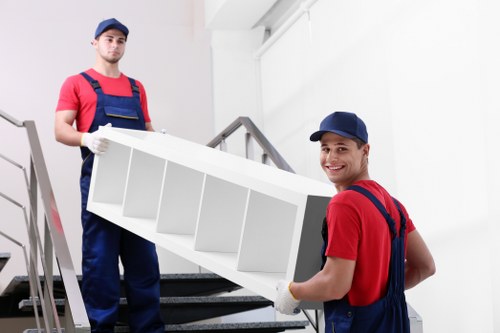
Choosing a local company for your move can bring several benefits beyond convenience. Local teams are usually better placed to understand the pace of the area, the types of premises involved, and the practical steps needed to avoid delays. For companies that need to stay operational, this local awareness can make a meaningful difference.
Another advantage is responsiveness. When you are working to a deadline — perhaps before a lease handover, a fit-out start date, or the launch of a new premises — it helps to have movers who can respond quickly, adjust to the building conditions, and coordinate closely with your schedule. For many businesses, that flexibility matters as much as the move itself.
Reasons local customers choose nearby specialists
- Better understanding of Clerkenwell streets and access constraints
- More suitable planning for central London buildings
- Faster coordination for surveys and pre-move discussion
- Practical knowledge of office, studio, retail, and hospitality spaces
- More realistic scheduling for busy commercial districts
- Reduced disruption through careful route and timing planning
Trust is also important. Businesses need to know that their equipment, records, and furniture will be handled carefully. A professional team should be able to explain how they work, what preparation is needed, and how they reduce risk during the relocation process.
Who benefits most from a local service?
Local commercial removals are particularly useful for start-ups growing into larger premises, established firms changing office layout, retailers updating stores, and landlords or managing agents coordinating unit changes. If your business needs to relocate quickly and efficiently, nearby support can be a major advantage.
Preparation checklist for a smoother business move
Good preparation can make moving day much easier. Even with a skilled removals team, the customer’s own planning still plays a major role in keeping the project on track. If you are arranging a commercial relocation in Clerkenwell, a simple checklist can help everyone stay organised and reduce last-minute stress.
Start by identifying what actually needs to move. Some businesses relocate everything in one go, while others move in phases or leave some storage behind temporarily. Decide which items are essential on day one and which can be moved later. This helps the removals team prioritise the right furniture, files, and equipment.
Preparation checklist
- Confirm the moving date and any building access rules
- Identify parking or loading requirements
- Label desks, files, boxes, and departments clearly
- Back up digital data before disconnecting equipment
- Notify staff of packing deadlines and responsibilities
- Disconnect and secure non-essential equipment early
- Set aside key documents, keys, and access cards
- Check whether furniture needs dismantling in advance
- Agree who will supervise both the old and new premises
It can also help to prepare a simple floor plan for the new workspace. This does not have to be complicated. Even a basic room-by-room layout helps the movers place items accurately, which saves time later and avoids unnecessary rearranging once the team has left.
Tip: if you have fragile stock, specialist equipment, or sensitive paperwork, make sure these are flagged early so the removal plan can include suitable handling.
Pricing factors for commercial moves
Many customers want to know what affects the cost of a commercial move before they request a quote. While exact prices are not listed here, understanding the main pricing factors can help you plan ahead and compare moving options more confidently.
The cost of office removals in Clerkenwell or any other commercial move usually depends on the amount of work required, the complexity of the property, and the level of support needed. A simple small-office transfer may be less involved than a multi-floor relocation with IT equipment, furniture dismantling, and access restrictions. Because every business is different, a tailored quote is usually the fairest approach.
Factors that can affect the quote
- Size of the office or business premises
- Volume and type of items being moved
- Number of floors and lift access
- Distance between the old and new location
- Need for packing, dismantling, or reassembly
- Special handling for IT, files, or fragile goods
- Parking, loading, and access complexity
- Whether the move needs to happen out of hours
A well-planned move can often be more cost-effective in the long run because it reduces wasted time, unnecessary trips, and disruption to staff. That is one reason many businesses prefer to work with a removals company that can help plan efficiently from the start.
Requesting a free quote is usually the best first step if you want a realistic idea of the work involved. Be ready to share as much detail as possible about your current premises, the destination, and any special requirements. That makes the estimate more useful and helps avoid surprises later.
Businesses we commonly help in and around Clerkenwell
Clerkenwell’s business mix is one of the reasons commercial moves in the area are so varied. Different sectors need different handling, and a flexible service can make it easier to support everything from compact office moves to larger commercial relocations. Nearby areas such as Farringdon, Barbican, Holborn, Bloomsbury, Islington, and Old Street often have similar property types and access considerations, so a local team can usually work across this wider central London area efficiently.
Some customers need a single office moved into a new suite. Others need support with stock, fixtures, files, or specialist workspace equipment. The most useful removals service is one that can adapt to the business model, the building, and the timetable.
Examples of sectors that may need help
- Creative and design agencies
- Legal, accountancy, and professional services offices
- Retailers and boutique brands
- Showrooms and display-led businesses
- Cafes, bars, and hospitality operators
- Co-working operators and serviced offices
- Start-ups and growing businesses
- Landlords and property managers coordinating unit handovers
In many cases, the key concern is minimising downtime. If your business serves clients or customers daily, you need a moving plan that keeps the interruption as short as possible. A local commercial removals team can help structure the move so that essential operations resume quickly in the new location.
How to choose the right commercial moving company
Choosing a mover is not only about who can lift the heaviest items. It is also about who understands the realities of your premises, your schedule, and your priorities. When comparing services for commercial moves in Clerkenwell, look for a company that asks sensible questions and gives practical answers.
You want a team that listens carefully. If your business has sensitive equipment, limited access hours, or a strict move-out deadline, the removals company should be ready to adapt. If you have old building constraints, shared entrances, or a move that needs to happen outside normal working hours, those details should be factored into the plan from the beginning.
What a dependable service should offer
- Clear communication before and during the move
- Flexible scheduling where possible
- Experience with central London commercial properties
- Careful handling of furniture, files, and equipment
- Support with packing and disassembly if needed
- A practical approach to access and parking
- Transparent quoting based on your actual requirements
Choosing local experience is especially helpful in Clerkenwell because the buildings are diverse and the streets can be busy. A company that knows the area can often help you avoid common moving headaches before they happen.
Questions to ask before you book
You may want to ask how the move will be planned, whether packing help is available, how fragile items are handled, and what happens if building access changes on the day. These are practical questions that help you feel confident about the service you are choosing.
Areas covered around Clerkenwell
Although this page is focused on Commercial Moves in Clerkenwell, many local customers also need help in the surrounding central London neighbourhoods. A good commercial removals service should be able to support businesses across nearby locations where similar access issues and building types are common.
Areas often covered include Farringdon, Barbican, Islington, Holborn, Bloomsbury, Old Street, Angel, King’s Cross, and parts of the City. If your business is relocating between one of these areas and Clerkenwell, a local team can often make the process easier because they understand the route, the parking pressures, and the likely building requirements.
Typical customer scenarios
- A design studio moving from a shared workspace into a larger office
- A law firm relocating files and desks into a new commercial suite
- A retailer transferring stock and shelving to a nearby unit
- A hospitality business refreshing its back-of-house facilities
- A small team moving out of a converted building with limited lift access
Whether the job is local, nearby, or part of a larger central London move, the same principles apply: plan carefully, protect important items, and keep the business disruption as low as possible.
Frequently asked questions
Below are some of the most common questions customers ask when looking for commercial moving support in the Clerkenwell area. If your question is not covered here, it is still worth asking when you request a quote or service discussion.
Can you move our business outside normal office hours?
Many commercial relocations can be arranged for early mornings, evenings, or weekends, depending on the building rules and availability. This is often useful for businesses that want to limit interruption during working hours.
Do you help with packing and unpacking?
Some moves include full or partial packing support. This can be especially helpful for files, office supplies, and fragile equipment. You can usually discuss the level of help you need when planning the job.
What if our building has limited parking or difficult access?
That is very common in Clerkenwell and nearby areas. A professional team should be able to plan around restricted access, loading conditions, and building entry requirements. Sharing this information early helps shape the move properly.
Can you move IT equipment and office technology?
Yes, but it should be handled carefully. IT and electronics may need extra protection, cable labelling, and coordinated disconnection. It is sensible to back up data before the move and to identify any specialist equipment in advance.
Do you handle small office moves as well as larger relocations?
Yes. Many commercial removals teams help with compact office moves, individual departments, and larger multi-room relocations. The service should scale to the size of your business.
How far in advance should we book?
It is usually best to book as early as possible, especially if you need a specific date, out-of-hours access, or a move in a busy central location. Early planning also gives you more time to prepare staff and equipment.
Ready to plan your move?
If you are preparing for a business relocation, office transfer, or commercial clearance in the area, a local team can help make the process more manageable from the first conversation to the final item being placed. Commercial Moves in Clerkenwell often involve tight timings, access rules, and valuable equipment, so choosing a service that understands the local environment is a smart first step.
Contact us today to discuss your move requirements, request a free quote, or book your service now. Whether you are relocating within Clerkenwell or moving between nearby central London areas, the right planning and support can help your business move forward with far less disruption.
For businesses that need careful coordination, local experience, and a practical approach, a well-managed commercial move can make all the difference.